Sagis Dermatopathology Case Review:

Dermatopathology Anatomy: Identifying Biopsy Locations and Features Dermpath Essentials Part 3

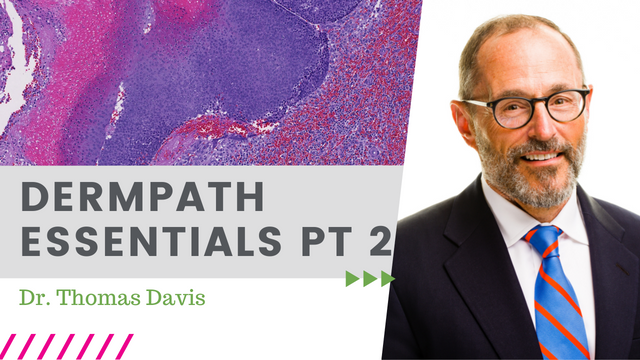
This video, “Dermpath Essentials Part 3,” provides a helpful guide for dermatology residents on how to identify the anatomic location of a skin biopsy. The speaker, Dr. Tom Davis, walks through various examples to highlight the key microscopic features of different body parts.

The session covers how to recognize biopsies from:

  • The Face and Ears: By looking for features like solar elastosis and the presence of cartilage.
  • The Axilla and Genitals: Identified by the presence of apocrine glands and smooth muscle fibers, respectively.
  • The Trunk and Extremities: Differentiated by dermal thickness and the concentration of follicular units.
  • Specialized Areas: The video also covers unique sites like the oral mucosa (lacking a granular layer) and volar skin (thickened stratum corneum and no hair follicles).

Understanding these regional differences is a critical skill for improving diagnostic accuracy and is a key topic for board exams.


Chapter Breakdown:

  • Chapter 1: Introduction to Regional Anatomy in Dermatopathology [00:01]
    • This chapter explains why it is crucial to identify the correct anatomic site of a biopsy. Knowing the location helps in creating a differential diagnosis and avoiding specimen mix-ups.
  • Chapter 2: Identifying Facial Skin [02:18]
    • This section details the key features of a facial skin biopsy, including thin epidermis, solar elastosis, and a high concentration of vellus hair follicles and sebaceous glands.
  • Chapter 3: Identifying Ear Skin [03:29]
    • The video shows how to recognize a biopsy from the ear by the presence of cartilage, fibrofatty tissue, and a high density of vellus hair follicles.
  • Chapter 4: Identifying Axillary Skin [04:51]
    • This part of the video focuses on a biopsy from the axilla, highlighting the defining characteristic of enlarged apocrine glands.
  • Chapter 5: Identifying Trunk or Proximal Extremity Skin [05:37]
    • The speaker describes the features of a biopsy from the trunk or proximal extremities, which are characterized by a thick dermis and a low concentration of follicular and sebaceous glands.
  • Chapter 6: Identifying Genital Skin [06:49]
    • This section explains how to identify genital skin (specifically the scrotum) by the presence of abundant smooth muscle fibers in the dermis.
  • Chapter 7: Identifying Oral Mucosa [07:33]
    • The video shows how to recognize a biopsy from the oral mucosa by its keratinizing epithelium that lacks an intervening granular layer.
  • Chapter 8: Identifying Volar (Palm/Sole) Skin [08:34]
    • This chapter details the characteristics of volar skin, including a very thick stratum corneum, the absence of hair follicles, and the presence of eccrine ducts.
  • Chapter 9: Identifying Scalp or Bearded Area Skin [09:49]
    • The video explains how to identify a biopsy from the scalp or bearded area by the presence of large hair follicles that extend into the subcutaneous fat.
  • Chapter 10: Identifying Distal Extremity Skin [10:26]
    • This section describes the features of a distal extremity biopsy, which often includes significant subcutaneous fat and large vessels at the dermal-subcutaneous junction.
  • Chapter 11: Identifying Eyelid Skin [11:58]
    • The video shows how to identify eyelid skin by its thinness, increased number of follicular units, and the presence of skeletal muscle in the dermis.
  • Chapter 12: Conclusion and Upcoming Topics [13:14]
    • The video concludes with a summary and a preview of the next session, which will cover unknown cases for diagnostic practice.

Are you interested in viewing other dermpath diagnostic videos like this?
Type a diagnosis in the search window below to see applicable videos.

Generic filters
Exact matches only
Search in title
Search in content
Search in excerpt

Related Case Reviews

IHC: Special Stains

A Pattern-Based Approach to Dermatopathology: Analyzing Cases from Inflammatory to Neoplastic

An Introduction to Dermatopathology for Residents: Study Techniques, Tissue Processing, and Key Concepts

Join Our Dermpath Educational Community

Access expert-led content, and stay in the loop on upcoming sessions and resources from our Dermpath Educational community.

Presented by

Dr. Thomas Davis

Did you know we are diagnostics lab?

Sagis Dermatopathology delivers accurate, timely diagnoses with dedicated support from our lab team and direct access to our dermatopathologists. 

Dr. Davis is board-certified in dermatology and dermatopathology by the American Board of Dermatology and the American Board of Pathology.

He is also Sagis’ VP of Education. Click to view his full bio on the left.

Sagis Diagnostics offers the latest in derm and dermpath diagnostics through our Resident Education Program.

RSVP

Interested to be a part of our weekly sessions?

Email: rsvp@sagisdx.com

EDUCATION

Have questions about our programs?

Email: education@sagisdx.com

Visit: https://www.sagisdx.com/education

CAREER RESOURCES

Looking for a Job after Graduation?

Click: https://www.sagisdx.com/post-residency-fellowship/

Let us know what you’re looking to specialize in. We’ll help connect you to our wide network.